Emerald ash borer (Agrilus planipennis, or EAB) is a highly destructive invasive beetle that targets and kills all species of ash trees (Fraxinus spp.). Since its initial detection in the U.S. in 2002, EAB has been responsible for the loss of hundreds of millions of ash trees across the Midwest and East Coast.
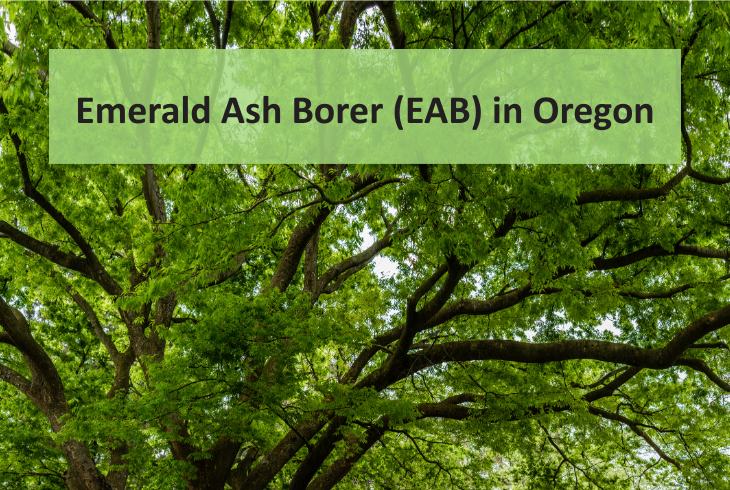
Image of ash tree
On June 30, 2022, EAB was confirmed for the first time on the West Coast in Forest Grove, Oregon—just miles from parks and natural areas managed by THPRD. This discovery marks a serious threat to our local environment, particularly to the native Oregon ash (Fraxinus latifolia), a species commonly found along streams and wetlands in Western Oregon. Oregon ash plays a critical ecological role, supporting water quality, wildlife habitat, and biodiversity. As EAB spreads, the loss of these trees will significantly alter our natural areas.
EAB Identification
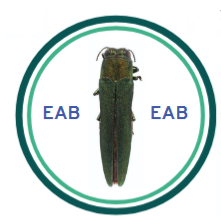
The small, metallic-green beetle is native to Asia. Its larvae burrow into the bark of ash trees, causing canopy dieback and ultimately, tree death. The ½ inch beetle is often challenging to detect, especially in newly infested trees. There are multiple beetles in Oregon that are commonly mistaken for EAB. If you find a green insect that you think might be EAB, compare it to this linked image of EAB lookalikes, before making a report to the Oregon Invasive Species Hotline. Adult beetles begin to emerge as the weather warms will continue to fly through August.
Potential Impact
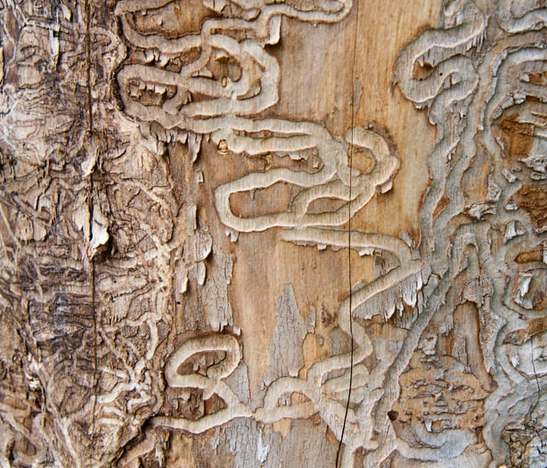
EAB kills trees usually over a period of 3 to 7 years depending on the size of the tree. It is the larval stage that does the damage. The larvae live under the bark of the tree and feed in the tissue layer directly beneath the bark. This layer contains the vascular system of the tree which transports water from the roots to the crown. As the larvae develop, they create tunnels throughout this tissue which stops the flow of water and nutrients and kills eventually kills the tree.
Image of Ash Tree Infested with EAB
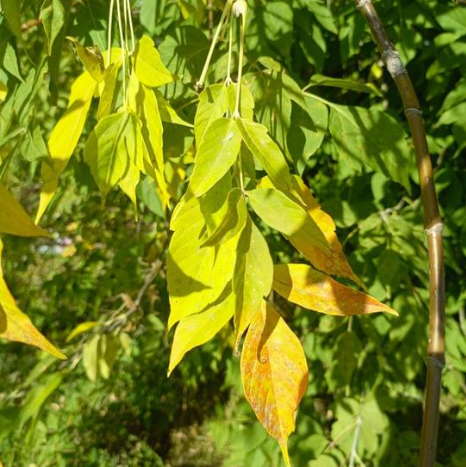
The most prominent symptom of EAB is dieback of tree canopy. It is not unusual for as many as one half of a tree’s branches to die back during the first year of attack. The tree tries to compensate for this loss by sprouting new growth below the level of infestation. At this time, the bark may begin to split. Eventually, the adult beetles emerge from the bark. In the process of emerging as adults, they leave a “D” shaped exit-hole that is about 1/8 inch wide.
THPRD Response and Readiness
Tualatin Hills Park & Recreation District manages over 2,000 acres of natural areas, including roughly 650 acres of ash-dominated ecosystems. Our Nature & Trails staff is closely monitoring the spread of Emerald Ash Borer (EAB) and actively managing its impact on these critical habitats. In partnership with local and state agencies, THPRD is assessing the health of trees across parks and natural areas, removing high-risk trees when necessary, and developing long-term strategies to protect our urban canopy and wetland ecosystems. These efforts are essential to ensure the continued resilience and vitality of our parks and natural spaces.
Determine if you have ash on your property. If you do, discuss your options with an ISA-certified arborist to assess possible options such as treatment with effective insecticides.
EAB Updates
August 2025 – THPRD staff collected a positive sample of an adult EAB at Hazeldale Park as part of the detection program. Visit the EAB Infestation Dashboard to see the status on EAB in Oregon.